
current games and concepts
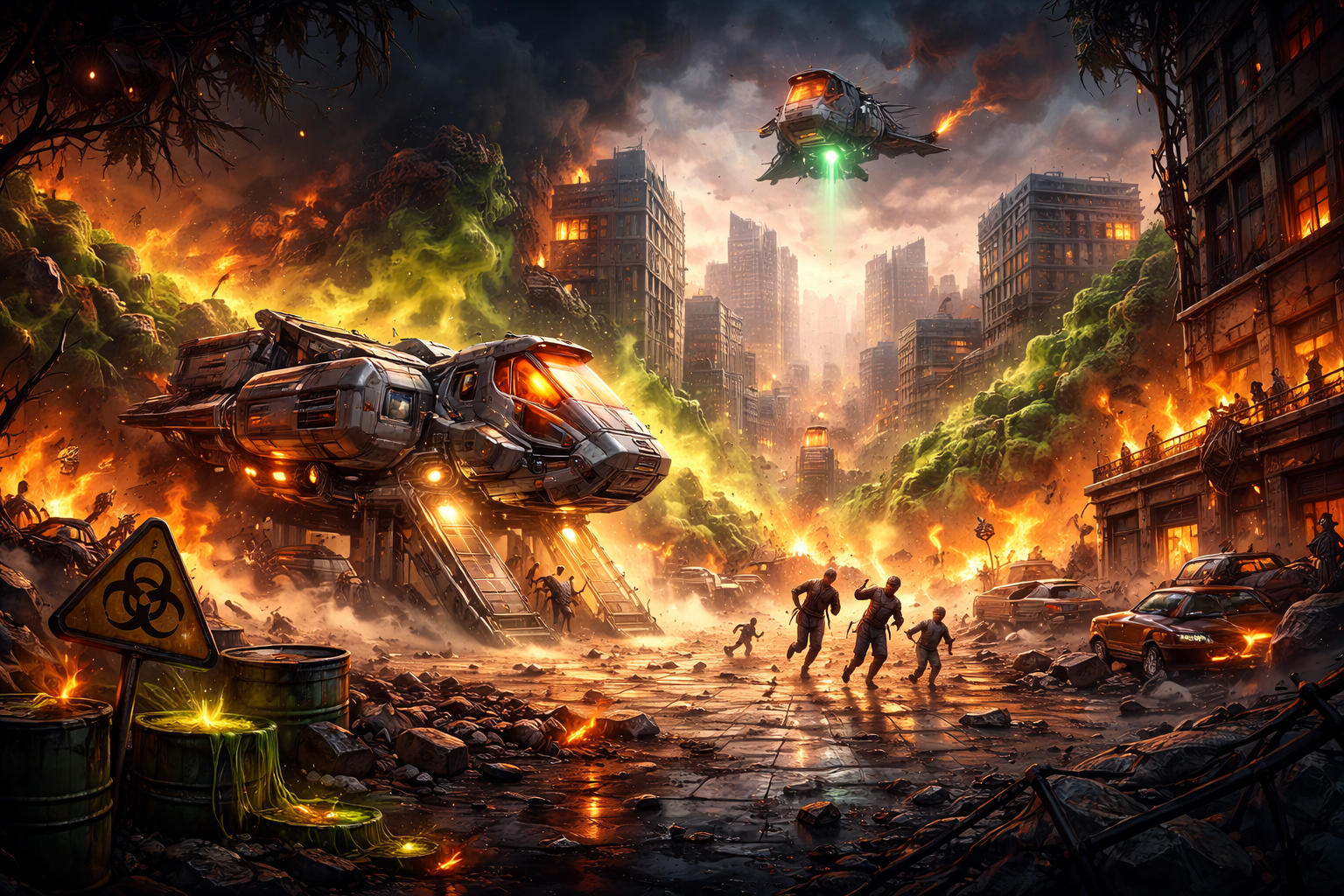
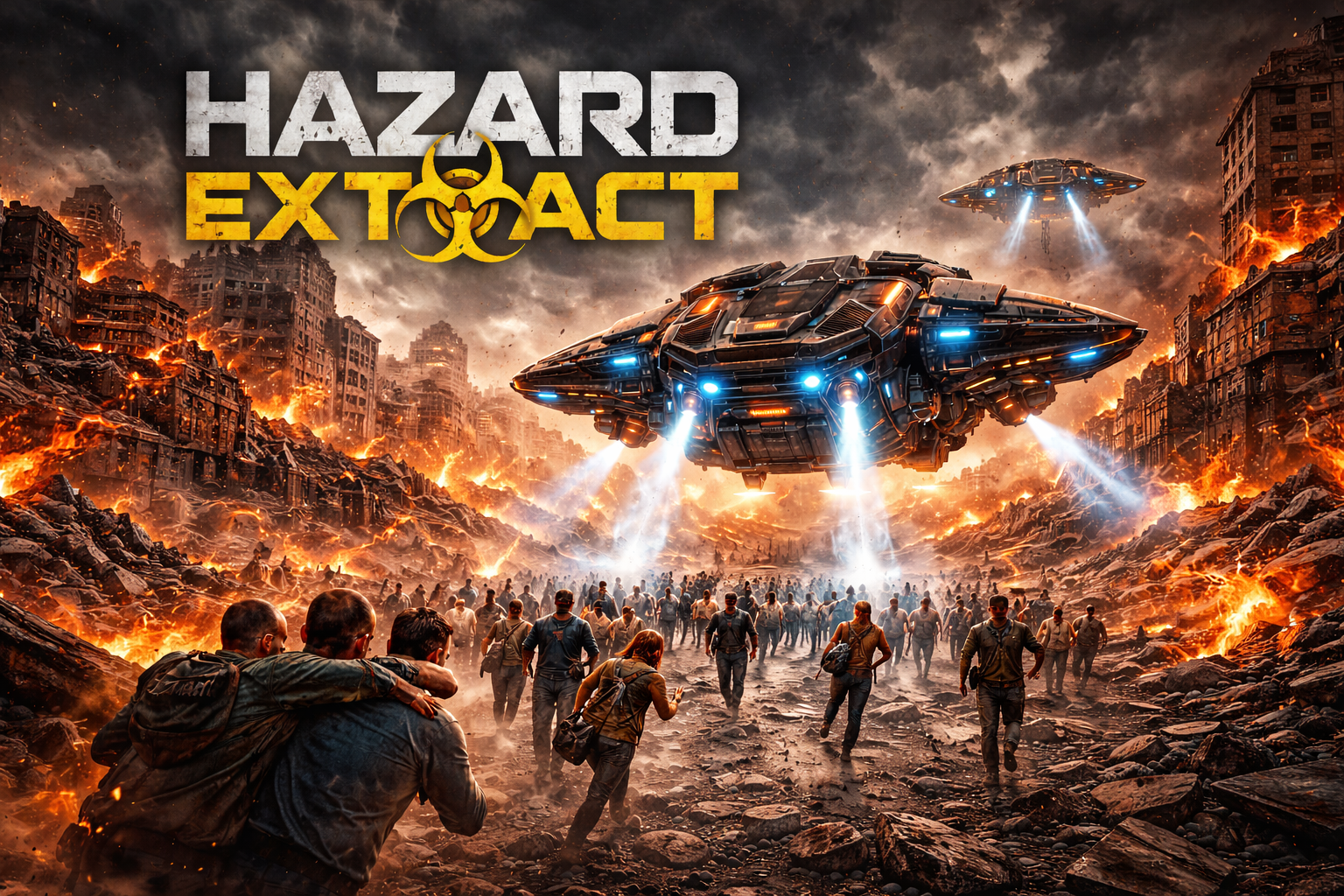
Hazard Extract challenges players to rescue civilians from a collapsing city. Deploy shuttles, manage chaos, and stay ahead of spreading hazards that threaten to swallow the entire map.
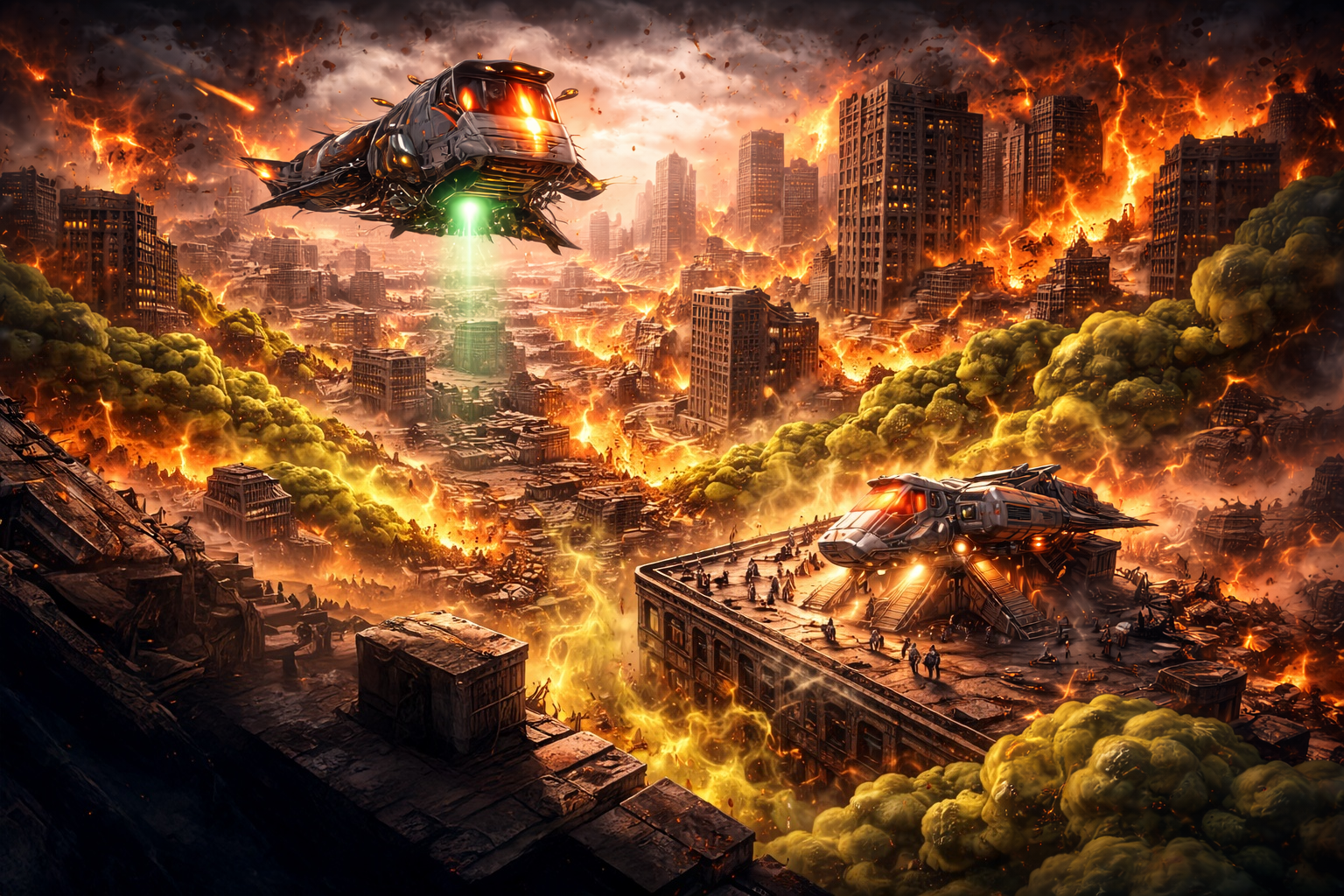
Hazard Extract
Hazard Extract is a fast-paced evacuation strategy game where players must rescue civilians from a collapsing city while a spreading disaster slowly consumes the entire map.
The city is dying.
Fires spread through streets and buildings, infrastructure collapses, and chaos grows with every passing moment. Civilians flee through the ruins searching for safety — but the evacuation fleet is limited, and the disaster never stops advancing.
Your job is to save as many people as possible before the city is lost.
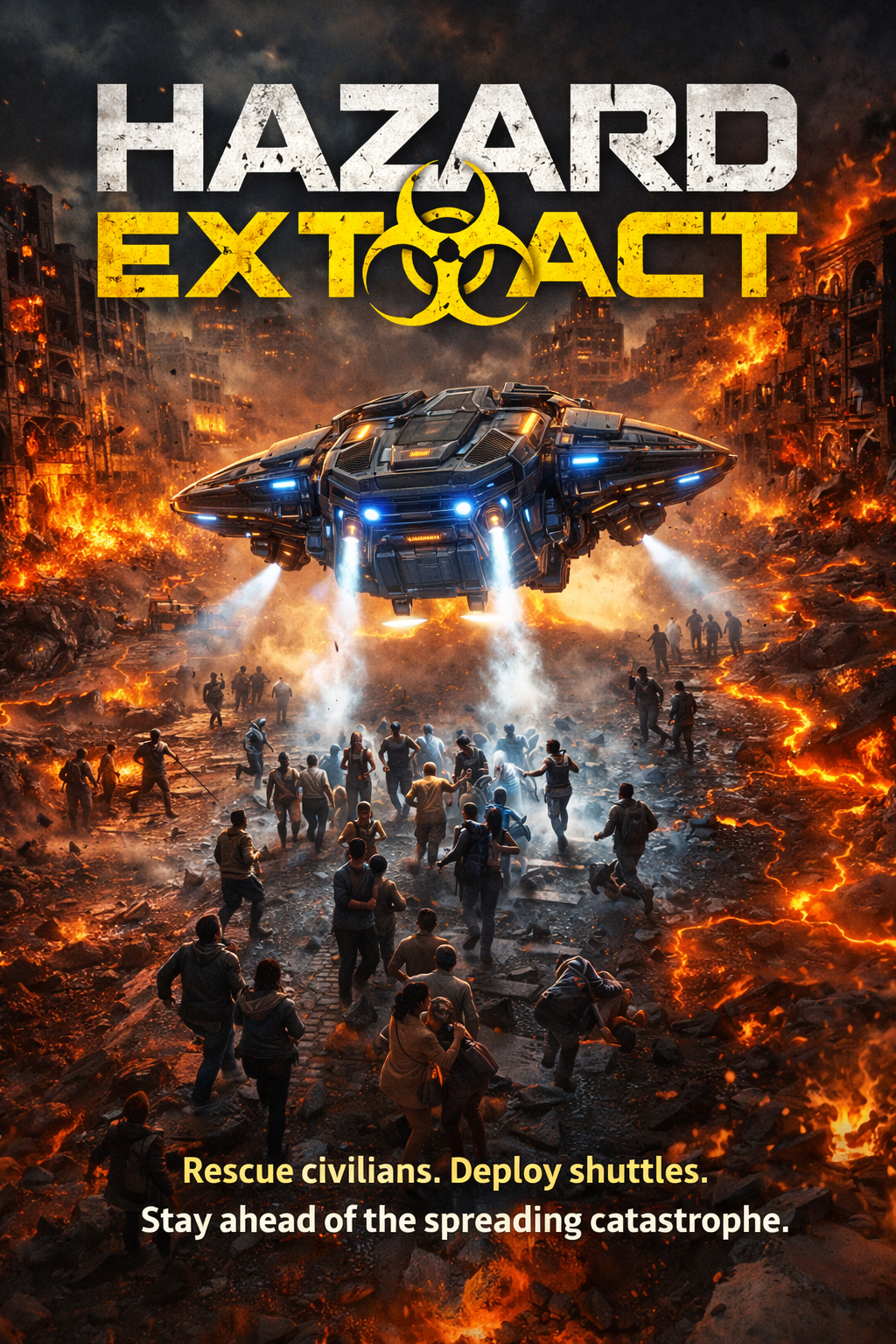
The Core Idea
At its heart, Hazard Extract is about crisis management under pressure.
The player controls a rapid response evacuation system from orbit. Using a small fleet of rescue shuttles, players must deploy landing zones across the city and guide civilians to safety while avoiding hazards that spread, grow, and reshape the battlefield.
The map is constantly changing. Areas that were safe moments ago may become deadly infernos minutes later.
Every decision matters.
Where you land a shuttle.
Who you prioritize rescuing.
Which areas you abandon.
Save too few civilians, or let the hazards spread too far, and the city will be consumed.
Gameplay Overview
The game takes place on a single large urban low-poly map, viewed from a strategic top-down perspective.
Civilians spawn around the edges of the city and in scattered locations across the map. They are frightened, disorganized, and often panicking as the disaster spreads.
Without direction they wander, hesitate, or flee randomly.
Players must deploy rescue shuttles to give them a path to safety.
By tapping anywhere on the map, players call down an evacuation shuttle from orbit. The shuttle flies in from off-screen, descends into the city, and lands at the chosen location.
Once the shuttle touches down, nearby civilians will sprint toward it, desperate to escape the disaster.
But landing zones are temporary.
Each shuttle can only remain on the ground for a short time before it must depart. Civilians that fail to reach the shuttle before it leaves are left behind.
Timing and placement are critical.
Civilians
Civilians are the heart of the experience.
They spawn in waves across the city and behave dynamically depending on the situation around them.
When no shuttle is present, civilians wander the environment in panic. Some freeze, some run aimlessly, and others try to flee the growing hazards.
Once a shuttle lands, civilians detect the closest valid extraction point and rush toward it.
However, they will not chase incoming shuttles. Only landed shuttles act as valid evacuation targets.
If a shuttle departs before they reach it, civilians will lose their target and begin panicking again.
Not all civilians are equal.
Some are slower, injured, or frightened. Others may be rare high-value survivors who grant larger score bonuses if rescued.
Saving them requires faster reactions and better planning.
The Hazards
The real enemy in Hazard Extract is not an army or a monster.
It is the disaster itself.
The city is being consumed by spreading hazard zones — massive fires, collapsing infrastructure, and uncontrollable destruction.
Hazards slowly expand across the map over time.
But the player’s actions can make them grow even faster.
When civilians die inside hazard zones, the disaster spreads more rapidly.
Landing a shuttle inside an active hazard zone also feeds the flames, causing the danger to expand even further.
Poor decisions can accelerate the destruction of the city.
However, hazards are not unstoppable.
If a fire is not fed by new destruction, it will slowly burn itself out and shrink over time.
Managing where hazards grow — and preventing them from spiraling out of control — becomes a core strategic challenge.
The Lose Condition
Hazard Extract is not about a fixed timer.
Instead, the game tracks how much of the map has been consumed by disaster.
If hazards spread across roughly 80% of the city, evacuation becomes impossible and the mission fails.
Players must rescue civilians and manage the spread of hazards to prevent the city from reaching that tipping point.
The longer you survive, the more chaotic the city becomes.
Shuttle Management
Rescue shuttles are powerful but limited.
Players will eventually control multiple shuttle bays, each with its own cooldown and refueling time.
After completing an extraction run, a shuttle must return to orbit before it can be deployed again.
If hazards interfere with a landing zone, the shuttle may abort the landing or suffer extended cooldown times.
Future disasters may also disrupt shuttle operations.
Electromagnetic pulses, collapsing buildings, or other hazards could temporarily disable shuttle systems and delay future rescues.
Players must carefully decide when and where to deploy their limited evacuation fleet.
Escalation and Chaos
As the game progresses, the situation worsens.
More civilians appear.
Hazards spread faster.
The map becomes more fragmented and dangerous.
Safe zones disappear.
Players must constantly adapt, shifting landing zones across the city as the environment changes.
The experience becomes a balance of speed, planning, and triage.
Sometimes you can save everyone in an area.
Sometimes you have to abandon entire districts to save the rest of the city.
Design Philosophy
Hazard Extract is built around a simple but highly replayable gameplay loop.
The rules are easy to understand:
Call a shuttle.
Rescue civilians.
Stay ahead of the spreading disaster.
But mastering the system requires fast thinking and careful decision making.
Every playthrough is different.
The disaster spreads in new ways.
Civilian movement changes.
Safe zones shift constantly.
The goal is to create a game that is easy to pick up but difficult to master, where each run feels like a desperate evacuation effort unfolding in real time.
The Vision
Hazard Extract is designed as a tight, focused experience rather than a massive complex system.
The goal is a game that players can start instantly, understand within seconds, and keep replaying as they try to beat their previous rescue records.
Every successful rescue feels heroic.
Every failure feels like a city slipping through your fingers.
And every second counts.

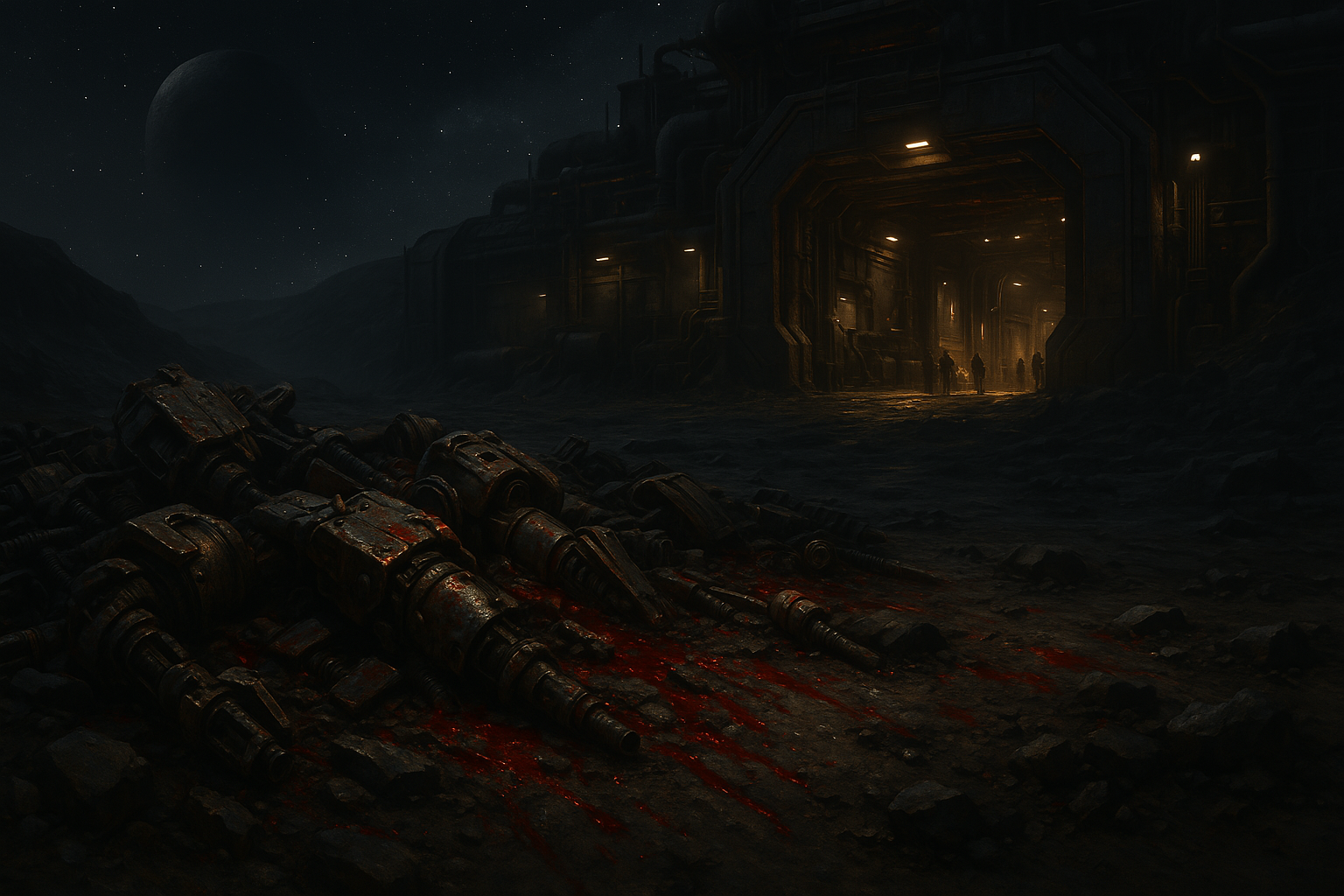
Ironwake: War below (Concept, NOT CURRENTLY IN-DEVELOPMENT)
A survival management sim set deep beneath a dying world.
Buried beneath the ruins of a shattered city, your shelter is one of the last surviving outposts of humanity. In Ironwake: War Below, you’ll lead a crew of survivors through crisis, rationing, and combat in a brutal post-apocalyptic world scarred by subspace collapse and orbital devastation.
Build a sprawling underground base. Assign your crew to power stations, hydroponic farms, and security posts. Defend against raids, sabotage, and graviton storms. Assemble a combat mech from scavenged parts and send it topside on off-screen missions to rescue survivors and recover lost tech.
With layered visuals, detailed crew systems, and no paywalls or ads, War Below delivers a premium, atmospheric experience built for strategy fans who value grit, depth, and choice.